
Chlorine
Home » Core Products » Gases » Chlorine
The Wonders of Chlorine
As a powerful oxidizing agent, chlorine is critical in disinfection, chemical manufacturing, and plastics production.
With more than 75 years of experience as a pioneering innovator, Alexander Chemical offers top-quality chlorine, expert guidance, and reliable delivery services. Safety and compliance are our top priorities.
Key Characteristics of Chlorine
- Chemical formula: Cl2
- Appearance: Clear, Yellow
- Odor: Strong, Sharp, and Irritating – Often Compared to Household Bleach
- Solubility: Slightly Soluble in Water; Forms Hypochlorous Acid (HOCl) Upon Dissolution
- Boiling Point: −34.04 °C (−29.27 °F)
- Storage Requirements:
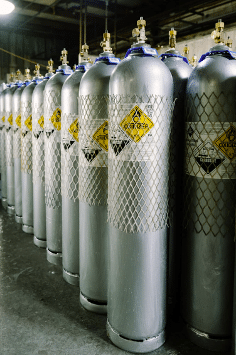
- Stored under pressure in certified cylinders or bulk containers.
- Highly reactive – requires secure, leak-proof storage solutions and professional handling.
Chlorine is a hazardous material. Mishandling can lead to serious safety and environmental risks. Always rely on certified professionals for storage and evacuation.
Our Chlorine Handling & Evacuation Services
The professionals at Alexander Chemical bring decades of experience and expertise to managing chlorine with precision and care.
We are pleased to offer these valuable services:
- Supplying and filling certified chlorine cylinders tailored to your specific requirements.
- Evacuating returned or partially used cylinders in strict compliance with regulations.
- Inspecting and servicing all containers for structural integrity and compliance.
- Providing expert guidance on best practices for CL2 usage, storage, and compliance.
What are the Uses of Chlorine?
Water Treatment
Chlorine is the gold standard for disinfecting drinking water and wastewater, ensuring safe, clean water for communities worldwide.
Manufacturing
From plastics like PVC (polyvinyl chloride) to pharmaceuticals, chlorine is a key ingredient in producing everyday products that shape modern life.
Agriculture
Chlorine-based compounds help create pesticides and fertilizers, boosting crop yields to feed a growing planet.
Healthcare
Chlorine is essential for synthesizing life-saving drugs and sterilizing medical equipment, safeguarding public health.
Pulp and Paper
Chlorine brightens paper, making it crips and white for books, packaging, and other products.
Aluminum Secondary Smelting & Recycling
Aluminum secondary smelting is a process used to recycle aluminum from aluminum-containing scrap. This process involves two main categories of operations: scrap pretreatment and smelting/refining.
A Brief History of Chlorine
Chlorine’s history begins in 1774 when Swedish chemist Carl Wilhelm Scheele first isolated it as a greenish-yellow gas.
Initially mistaken for a compound, it wasn’t until 1810 that Sir Humphry Davy confirmed it’s an element, naming it “chlorine” from the Greek word “khloros,” meaning pale green.
Its powerful properties were soon harnessed during the Industrial Revolution, notably for bleaching textiles.
By World War I, chlorine gained notoriety as a chemical weapon, but this dark chapter paved the way for its peaceful, transformative uses in sanitation and industry.
Today, chlorine is celebrated as a vital tool in improving lives globally.
More Facts About Chlorine
- Elemental Origins: Chlorine is the 17th element on the periodic table (atomic number 17) and is part of the halogen family, known for its reactivity.
- Natural Abundance: It’s the second-most abundant halogen in Earth’s crust, often found in salt (sodium chloride), seawater, and underground deposits.
- Pool Party Hero: Ever wonder why swimming pools smell the way they do? That’s chlorine at work, keeping water safe by killing bacteria and algae!
- Cosmic Connection: Chlorine is even present in space – traces have been detected in interstellar gas clouds.
Chlorine FAQs
Chlorine has the chemical formula Cl₂, consisting of two chlorine atoms bonded together.
Chlorine has a strong, bleach-like odor that is easily detectable, even at low concentrations.
When properly handled, chlorine is one of the most effective and widely used disinfectants for municipal and industrial water systems.
Chlorine is typically stored in high-pressure cylinders or bulk tanks, engineered to meet safety standards for containment and transport.